

Is Your Infant Car Seat at Risk from the Latest Structural Recall Issue
Infant Car Seat Recalled Over Structural Issue; How to Check if Your Model Is Affected
A recent recall of several infant car seat models has drawn significant attention among safety experts. The recall stems from a structural defect that could compromise crash protection, prompting regulatory oversight and manufacturer intervention. Professionals in child safety engineering emphasize that even minor deviations in material performance or assembly precision can lead to major safety implications. The key takeaway is clear: affected units must be identified and replaced immediately, while similar models should undergo precautionary inspection to prevent risk exposure.
Understanding the Recent Structural Recall of Infant Car Seats
The recall event has underscored the importance of rigorous design validation and post-market monitoring within the child restraint industry. To grasp its full scope, one must examine how the issue emerged, which manufacturers were involved, and what steps authorities have taken.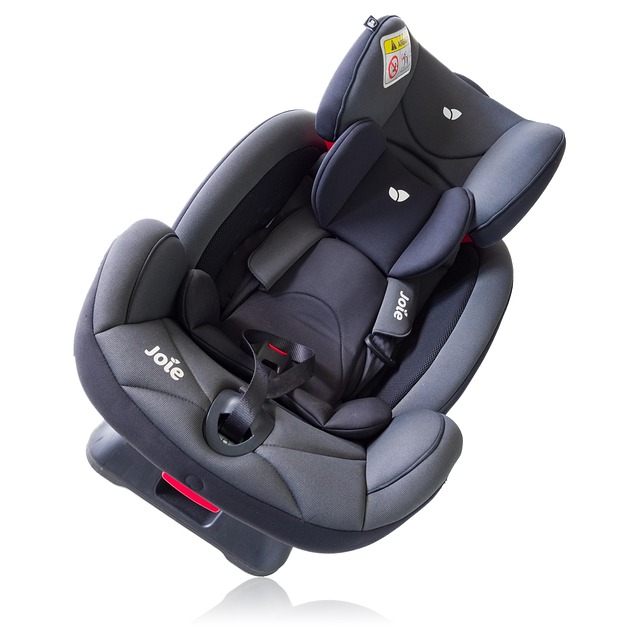
Overview of the Recall Event
The recall was announced after multiple consumer reports indicated cracking in seat shells during routine use. Several leading manufacturers voluntarily initiated the recall following consultations with national highway safety regulators. The timeline reveals that early signs appeared during internal quality audits, but confirmation came only after third-party impact testing revealed consistent failure patterns across production batches. Regulatory bodies such as the National Highway Traffic Safety Administration (NHTSA) and Transport Canada were instrumental in overseeing corrective measures and verifying compliance with federal standards.
Nature of the Structural Issue Identified
At the heart of this recall lies a structural weakness within the molded polymer shell of certain infant car seats. The affected units exhibited reduced tensile strength due to inconsistent resin curing during manufacturing. When subjected to dynamic crash forces, these weakened sections may fracture prematurely, compromising occupant containment. Laboratory testing under FMVSS 213 protocols demonstrated that some shells failed at stress levels below required thresholds. Field data from warranty claims further supported these findings, showing a correlation between environmental exposure—particularly heat cycling—and accelerated material degradation.
Compliance and Safety Standards Involved
Infant car seats sold in North America must comply with Federal Motor Vehicle Safety Standard (FMVSS) No. 213, which governs crash performance and structural integrity requirements for child restraint systems. Compliance assessments include sled testing under simulated frontal impacts at 30 mph, ensuring that no component detaches or deforms beyond prescribed limits. For manufacturers, this event highlights gaps in process control and supplier quality assurance programs. It also reinforces the need for continuous verification against ISO 9001-aligned production standards to maintain traceability from raw materials through final assembly.
Assessing Whether a Car Seat Model Is Affected?
Determining whether a specific model is impacted requires careful examination of labeling information and consultation with official recall databases. Even professionals familiar with restraint systems are urged to verify unit details rather than assume equivalence across model lines.
Methods to Identify Recalled Units
Each infant car seat bears a label containing its model number, serial code, and manufacturing date—typically located on the underside of the base or near the harness adjustment mechanism. These identifiers can be cross-referenced against online recall lookup tools provided by agencies such as NHTSA or Health Canada. Users may also contact manufacturers directly through customer support channels for written confirmation or replacement authorization letters.
Evaluating Risk for Unlisted or Similar Models
Experts caution that structurally similar models produced on shared tooling may exhibit comparable vulnerabilities even if not explicitly listed in recall notices. Engineers often analyze mold geometry, reinforcement ribs, and load paths when assessing potential cross-model risks. For instance, if two models share identical base molds but differ only in fabric trim or accessories, they might warrant equal scrutiny. A proactive inspection—checking for visible cracks near belt paths or mounting points—is advisable even when official recalls exclude a specific SKU.
Technical Analysis of Structural Failure Mechanisms
Understanding why these failures occur requires delving into material science and mechanical design principles applied to infant restraints.
Material Fatigue and Load Distribution Issues
Most modern infant car seat shells are made from polypropylene or high-density polyethylene composites chosen for their impact resistance and moldability. However, improper cooling rates during injection molding can create internal stresses leading to microcracks over time. Dynamic crash tests reveal common failure points near harness slots where stress concentrations peak under load transfer from occupant movement. Environmental factors such as prolonged UV exposure or repeated temperature cycling further reduce polymer toughness by breaking down molecular chains—a phenomenon well-documented in automotive plastics research.
Design and Assembly Factors Contributing to Weaknesses
Structural reliability depends not only on materials but also on how parts are joined and reinforced. Poor joint design or inadequate fastener torque can allow incremental loosening that magnifies deflection during impact events. Assembly tolerances play a critical role; even millimeter-scale misalignments between shell halves can alter energy absorption characteristics over months of daily use. Comparative analysis between compliant designs shows that those incorporating integrated steel reinforcements at load-bearing points maintain stiffness significantly longer than all-plastic equivalents subjected to identical fatigue cycles.
Manufacturer Response and Corrective Measures
Following identification of the defect pattern, manufacturers moved swiftly to contain risk through coordinated communication campaigns and engineering revisions.
Remediation Actions Implemented by Manufacturers
Manufacturers issued direct notifications via email lists, retailer alerts, and public safety bulletins instructing consumers to discontinue use immediately. Depending on model type, customers were offered free replacements or full refunds upon return of affected units. Production lines were temporarily halted while revised molds incorporating thicker ribbing structures were validated through accelerated life-cycle testing before resuming shipment.
Role of Independent Testing and Certification Bodies
Independent laboratories accredited under ISO/IEC 17025 conducted verification tests on redesigned components prior to market re-entry. These third-party evaluations serve as impartial confirmation that corrective actions effectively mitigate prior failure modes. Collaboration between manufacturers and safety authorities has since expanded into ongoing audit programs designed to track field performance metrics over time—a practice increasingly seen as essential for maintaining consumer trust in critical safety products like infant car seats.
Recommendations for Industry Professionals and Safety Experts
Beyond immediate remediation lies an opportunity for systemic improvement across design validation pipelines and post-market surveillance frameworks.
Enhancing Quality Control Protocols in Production Lines
Integrating advanced non-destructive testing (NDT) methods such as ultrasonic scanning during assembly allows detection of voids or incomplete bonding before products reach consumers. Predictive maintenance models using sensor-based analytics can flag anomalies in molding pressure profiles indicative of potential batch inconsistencies. Aligning these measures with ISO 9001 continuous improvement cycles helps sustain long-term reliability benchmarks without inflating production costs excessively.
Strengthening Post-Market Surveillance Systems
Robust feedback loops linking field data back into design teams enable faster recognition of emerging issues before they escalate into large-scale recalls. AI-driven anomaly detection applied to warranty claim databases can identify statistical outliers suggesting latent defects months ahead of traditional reporting timelines. Industry-wide transparency initiatives—such as shared anonymized safety databases—encourage collaborative learning among competing brands while elevating overall product integrity standards across the market.
FAQ
Q1: What caused the recent infant car seat recall?
A: The recall was triggered by structural weaknesses in certain molded plastic shells that could fracture under crash loads due to inconsistent material curing during manufacturing.
Q2: How can owners check if their infant car seat is affected?
A: They should locate the model number on the product label and compare it against official recall databases maintained by national safety authorities.
Q3: Are non-listed models safe if they share similar designs?
A: Not necessarily; structurally identical versions may still carry risk even if unlisted, so professional inspection is recommended.
Q4: What actions did manufacturers take after discovering defects?
A: They issued replacement programs, updated tooling designs with reinforced geometries, and submitted new samples for independent certification testing.
Q5: How can future recalls be prevented?
A: By improving production monitoring through real-time data analytics, implementing stricter supplier audits, and maintaining transparent reporting channels between regulators and manufacturers throughout each product’s lifecycle.