What Food Recipes Work Best for Fast, Affordable, and Flavorful Meals?
Good food recipes should do a plain job: help someone decide what to cook, what to buy, and how to avoid waste. They should save time, keep cost in check, use familiar ingredients, and still put a decent meal on the table. If you work in the Food & Beverages market, recipes also help shoppers see how a product works in a real kitchen, not only on a shelf.
The recipes people use most are usually not the fancy ones. They are the ones a busy buyer, parent, student, office worker, or small retailer can make again without looking for twelve hard-to-find items. Public food data points to the same thing: people still cook at home often, but they want speed, fair cost, safe handling, and good flavor in one meal.
Why Do Food Recipes Matter More When Prices Rise?
When food prices go up, recipes become part of meal planning. You are not just picking dinner. You are deciding how to stretch a basket, use what is already in the kitchen, and avoid a last-minute takeout order that costs more than planned. That makes recipe content useful for shoppers and useful for food brands.
Value-Driven Pantry Planning
The USDA Economic Research Service reported in its July 2026 Food Price Outlook that food-at-home prices were predicted to rise 2.7% in 2026, while food-away-from-home prices were predicted to rise 3.5%. Source: USDA ERS Food Price Outlook, July 2026. For anyone writing food recipes, the point is practical: pantry goods, frozen vegetables, sauces, grains, beans, pasta, canned seafood, and shelf-stable beverages help keep meals steady when eating out feels harder on the budget.
Short Prep Times for Workday Dinners
Fast recipes work because many people cook after work, not during a quiet afternoon. FMI reported in 2024 that 32% of shoppers prepared workday dinners in under 30 minutes, up from 18% in February 2020. Source: FMI U.S. Grocery Shopper Trends, 2024. A recipe that says 25 minutes needs to be honest about that timing. Pre-cut vegetables, quick-cook noodles, ready sauces, and proteins that brown fast can make the difference between cooking and giving up.
Restaurant-Style Flavor at Home
USDA ERS data also showed that in 2025, 56.3% of total U.S. food expenditures went to food away from home, while 43.7% went to food at home. Source: USDA ERS Food Service Industry Market Segments, 2025 data. That does not mean home cooking is weak. It means people still like convenience and stronger flavor. Good recipes can borrow some of that appeal with crisp edges, layered sauces, and simple toppings. They should not ask a home cook to run a restaurant line at 7 p.m.
Which Ingredients Make Simple Food Recipes Taste Better?
Simple recipes still need a flavor plan. A dish with five ingredients can taste flat, or it can taste complete. The difference often comes from when you add aroma, acid, salt, fat, heat, and texture.
Aromatic Bases Before Sauces
Start with onion, garlic, ginger, scallion, celery, carrot, chili, or spices in warm oil. This small step helps canned tomatoes, boxed broth, instant noodles, frozen rice, or beans taste more cooked. For example, garlic, chili flakes, and tomato paste cooked for 90 seconds can give a plain pasta sauce more body. It is not a chef trick. It is just a useful habit.
Shelf-Stable Helpers With Real Use
Keep a few helpers that work in more than one meal: soy sauce, vinegar, mustard, canned beans, tuna, coconut milk, broth, salsa, peanut butter, curry paste, oats, and rice. These items support fast food recipes because they last well and let you change the plan. Rice can turn into a burrito bowl, fried rice, or a soup base. Canned beans can move from tacos to salad to a quick mash for toast. That flexibility matters when the fridge looks thin in the middle of the week.
Acid, Herbs, and Crunch at the End
Many home recipes taste better after one final check. Add lemon juice, vinegar, pickled onions, fresh herbs, toasted seeds, crushed crackers, or crisp vegetables right before serving. This last step cuts through heavy foods and helps packaged ingredients taste fresher. It is also low-cost flavor, which matters when you are cooking for more than one person.
How Can You Build Weeknight Food Recipes That Actually Work?
A reliable recipe is usually a formula, not a kitchen trick. Once you know the pattern, you can swap flavors without starting again from zero. That helps home cooks, and it also helps food businesses build recipe cards, product pages, and retail demos that shoppers can follow.
A Bowl Meal Formula
Use one cooked base, one protein, one or two vegetables, one sauce, and one topping. Try rice, chicken, roasted broccoli, teriyaki sauce, and sesame seeds. You can also use quinoa, chickpeas, cucumber, yogurt sauce, and herbs. A bowl meal works well for packed lunches because each part can be stored on its own. If the sauce stays on the side, the texture holds up better.
A One-Pot Pasta Formula
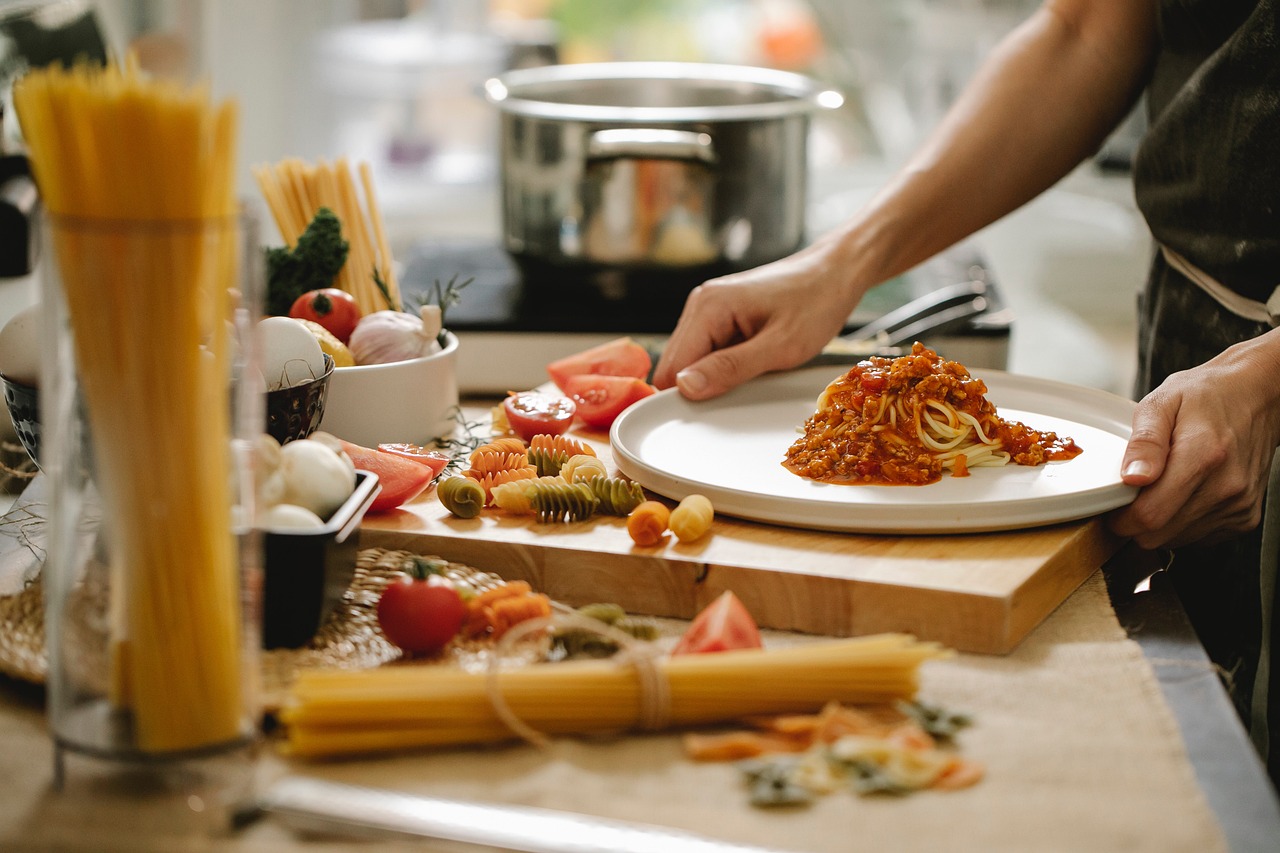
For a quick one-pot pasta, combine pasta, sauce, liquid, vegetables, and protein in one pan. Keep the heat steady, stir often, and add more liquid if the pasta starts to stick. A simple version uses 8 ounces of pasta, 2 cups of vegetables, 2 to 3 cups of broth or water, and cooked sausage, beans, or tuna. Finish with cheese, herbs, or olive oil, depending on what is already in the kitchen.
A Sheet-Pan Dinner Formula
A sheet-pan dinner works because the oven takes care of most of the cooking. Pair a protein with vegetables that cook at a similar speed. Salmon with asparagus is quick. Chicken thighs with potatoes need more time. Cut dense vegetables smaller and leave tender vegetables larger. Do not crowd the pan, because crowded food steams instead of browning. Those browned edges are often the part people pick at before dinner. That is usually a sign the recipe is doing its job.
What Food Safety Rules Should Every Recipe Respect?
Food recipes should taste good, but they also need safe handling. This is not the exciting part of cooking, but it protects the meal. It also builds trust when recipes are used for packaged foods, foodservice buyers, or retail shoppers.
Clean, Separate, Cook, and Chill
FoodSafety.gov says the four basic steps for home food safety are clean, separate, cook, and chill. It also states that about 1 in 6 Americans gets sick from food poisoning each year, with 128,000 hospitalizations. Source: FoodSafety.gov, last reviewed September 2023. Practical recipe writing should remind people to wash hands and keep raw meat away from ready-to-eat foods. It should also call out proper cooking and safe chilling for leftovers.
Thermometers Beat Guesswork
Color is not a reliable judge for doneness. The FDA food safety guidance lists safe cooking temperatures such as 145°F for fish and whole cuts of beef, pork, and lamb, 160°F for ground meats, and 165°F for poultry. Source: U.S. FDA Food Safety at Home fact sheet, 2017. A thermometer is not only for chefs. It is a small kitchen tool that removes a lot of doubt, especially with poultry, ground meat, and reheated food. See also: baby&kids.
Fast Cooling for Leftovers
FoodSafety.gov advises refrigerating perishable foods within 2 hours, or within 1 hour when the temperature is above 90°F. Source: FoodSafety.gov, 2023 review. For meal prep recipes, shallow containers help food cool faster. A date label is not exciting, but it is useful. It also saves the later sniff test on that container sitting at the back of the fridge.
How Do Food Recipes Support Health Without Feeling Strict?
Healthy recipes do not need to read like a warning label. A better route is to make normal meals a bit more balanced: more produce, steady protein, enough fiber, and less hidden sodium or added sugar where it makes sense.
More Produce in Normal Meals
The CDC reported that in 2019, only about 1 in 10 U.S. adults met fruit or vegetable intake recommendations. Source: CDC MMWR, 2019 adult intake data published in 2022. Recipes can help by adding vegetables to foods people already eat. Spinach can go into eggs, carrots into noodle soup, cabbage into tacos, berries into oats, and frozen peas into fried rice.
Sodium and Sugar Checks
The Dietary Guidelines for Americans 2020 to 2025 recommend limiting added sugars and saturated fat to less than 10% of calories per day and sodium to less than 2,300 mg per day for adults. Source: USDA and HHS Dietary Guidelines for Americans, 2020 to 2025. In recipe terms, this means tasting before adding salt and using herbs, acid, and spices where they fit. It also means choosing low-sodium broth when possible and measuring sweet sauces instead of pouring them straight from the bottle.
Protein, Fiber, and Satiety
A filling recipe usually has both protein and fiber. Pair eggs with whole-grain toast and fruit, beans with rice and salsa, yogurt with oats, or fish with potatoes and greens. For food products, this is a useful message because it connects the product to a meal people can rely on. A recipe that keeps people full is easier to repeat, and repeat use is what turns one purchase into a habit.
How Can Food and Beverage Brands Use Recipes to Sell More?
Recipes can sell without sounding like a sales pitch. They answer a simple shopper question: what can I do with this? That matters in FMCG, where buyers compare similar products quickly and often make the decision while standing in an aisle with a phone in hand.
Recipes as Product Education
A recipe can explain a product faster than a long feature list. A coconut milk brand can show curry, oats, smoothies, and soup. A canned bean line can show tacos, salads, dips, and rice bowls. The shopper sees use cases, not only ingredients. That makes the product feel easier to use. It also makes a repeat purchase more likely.
Retail Merchandising That Helps Shoppers
FMI reported in 2024 that 50% of shoppers used digital coupons and 37% used mobile phones to compare prices across stores. Source: FMI U.S. Grocery Shopper Trends, 2024. Pairing recipes with coupons, shelf tags, QR codes, and bundle displays can help shoppers connect price and meal ideas at the same time. The recipe should stay short. Nobody wants to scroll through a long page next to the freezer door.
Export-Friendly Adaptation for Local Taste
For export markets, keep the core recipe steady but allow local swaps. A noodle recipe may use sesame in one market, chili crisp in another, or lime and herbs somewhere else. This protects brand identity while respecting local kitchens. It also gives distributors a better way to show the product. The product feels less distant when the recipe looks familiar.
FAQ
Q1: What Makes a Food Recipe Good for Busy Weeknights? A: A good weeknight recipe uses easy ingredients, clear steps, and a cooking time that is honest. Aim for 30 minutes or less, one main pan when possible, and a short list of simple swaps.
Q2: How Can You Make Cheap Food Recipes Taste Better? A: Build flavor early with garlic, onion, spices, or tomato paste, then finish with acid, herbs, or crunch. These small steps make basic ingredients taste brighter without adding much cost.
Q3: Are Frozen and Canned Ingredients Good for Recipes? A: Yes. Frozen vegetables, canned beans, canned fish, tomatoes, broth, and fruit can be useful, safe, and budget friendly. Check labels if you need lower sodium or less added sugar.
Q4: What Food Safety Step Gets Missed Most Often? A: Many people skip thermometer checks or cool leftovers too slowly. Use a food thermometer for meat, poultry, and fish, then refrigerate leftovers within the recommended time.
Q5: How Can Food Brands Use Recipes in Marketing? A: Brands can use recipes to show real meal occasions, support retail promotions, explain product benefits, and help shoppers buy again. Simple, local, and visual recipes usually work best.