Baby shower decorations that feel stylish, safe, and easy to reuse
Start with a look that supports the whole event
Baby shower decorations work best when they do more than fill space. They should make the room feel intentional, create a few photo-friendly focal points, and still leave room for guests, food, gifts, strollers, and children. Instead of buying every cute item separately, start with a simple visual system: one theme, two or three colors, and a short list of pieces people will actually notice. This is especially useful for fast-moving consumer goods shoppers, where many party decorations are impulse buys. In most successful setups, the result comes from editing the selection, not adding more items.
Safety should be treated as part of the design, not as a separate afterthought. The U.S. Consumer Product Safety Commission warns caregivers about strangulation risks from strings and cords around babies. The American Academy of Pediatrics identifies balloons as a serious choking hazard for young children. The National Fire Protection Association also advises keeping decorations away from candles and other heat sources. These points do not mean the room has to look plain. They help hosts choose safer materials, better placement, and more practical alternatives.
Whether the shower is in a living room, rental clubhouse, restaurant room, backyard, or community space, start with one question: where will guests look first? Most events need one main feature area, one table treatment, and a few lighter touches near the entrance or gift area. For more family-focused shopping ideas, the baby and kids section can be a useful place to continue browsing.
Choose one theme, then narrow the color palette
The simplest way to make affordable decorations look more polished is to limit the palette. A baby shower does not need a complicated theme to feel finished. A clear color story often does more work than a clever slogan. Soft green and cream, dusty blue and warm white, peach and beige, lavender and ivory, or terracotta and sage can all work without leaning too heavily on gendered clichés.
The theme should guide the decorations without taking over the room. A woodland shower might use leaf garlands, small animal illustrations, kraft paper labels, and natural textures. A cloud theme might use white honeycomb balls, pale blue linens, and a simple “welcome baby” sign. A garden shower might use paper florals, seed-packet-style place cards, and fresh greenery placed away from food. The aim is for the room to read clearly at a glance.
When shopping, divide items into three groups:
- Foundation pieces: tablecloths, runners, backdrop fabric, stands, trays, and baskets.
- Visual accents: garlands, paper fans, honeycomb balls, banners, signage, and themed toppers.
- Disposable details: napkins, plates, cups, treat bags, stickers, and labels.
This separation helps control spending. Foundation pieces can often be reused for birthdays, kids’ parties, picnics, and seasonal gatherings. Disposable details can carry the baby shower theme without requiring every item to be custom-made.
Build the room around three decoration zones
A baby shower usually feels more organized when decorations are concentrated in clear zones instead of scattered throughout the venue. This is useful in small homes and shared spaces because it prevents clutter, keeps walkways open, and makes setup easier to manage.
The entrance or welcome area
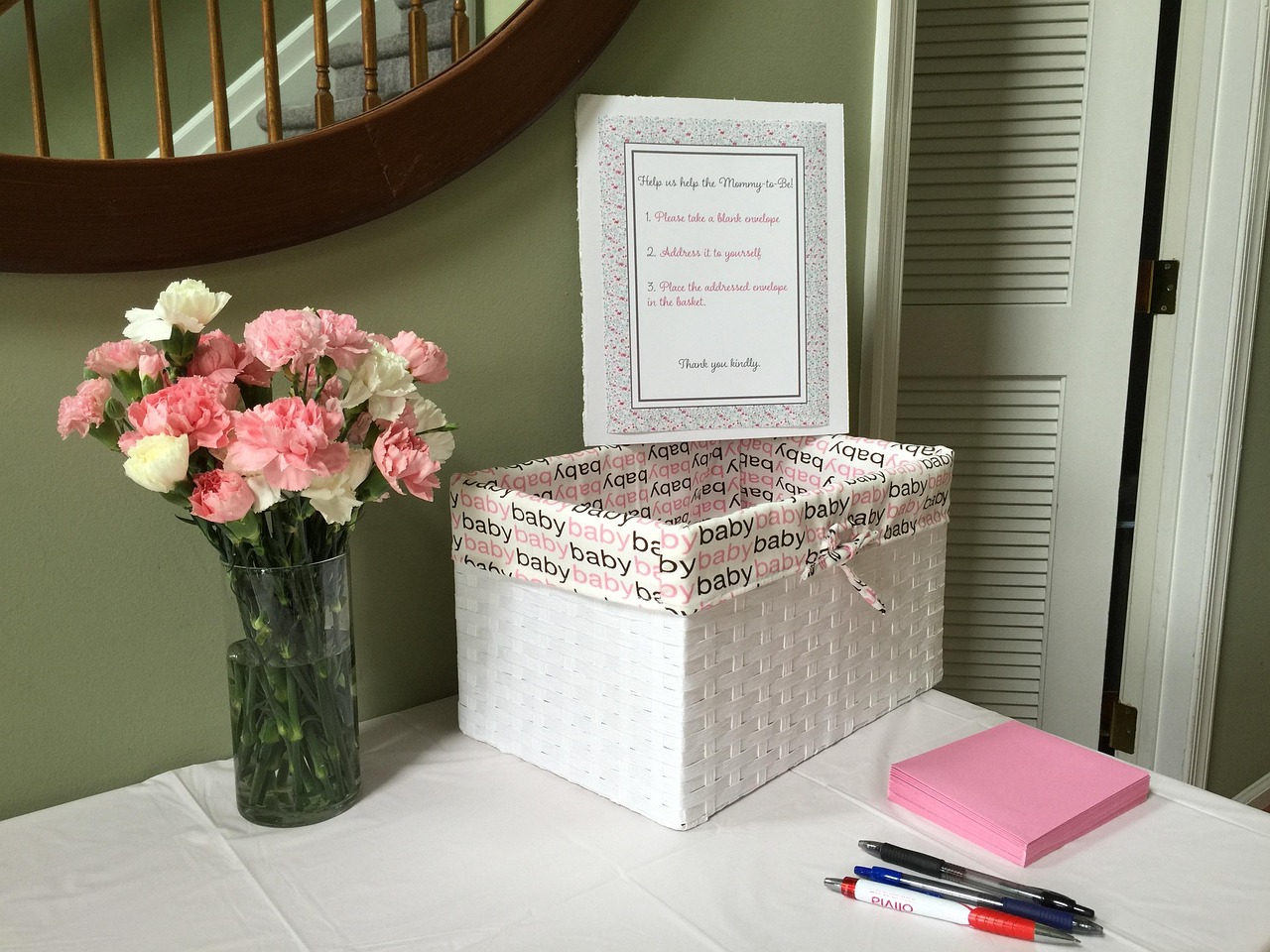
The entrance sets expectations before guests reach the food or gift table. A small welcome sign, a standing easel, a basket for cards, and a few coordinated paper decorations are often enough. If the shower includes a guest book, prediction cards, or advice cards, place them here so guests can participate as they arrive.
For outdoor showers, use weighted bases, clips, or stands that can handle wind. Loose paper signs and lightweight table décor can shift quickly outside, so a practical setup often looks better than a fragile one. Avoid placing long ribbons or hanging strands where guests may walk through them, especially if children will be present.
The food and dessert table
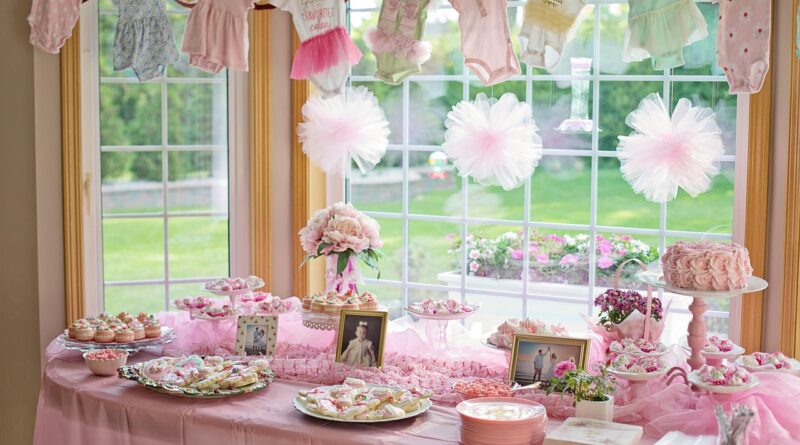
The food table is usually the most photographed area after the parent-to-be. Keep this zone visually strong but functional. A backdrop, a table covering, one height element, and labeled serving pieces can create a complete look without crowding the food.
Height matters. Cake stands, risers, crates, and trays help the display look layered. Anything tall should be stable and placed away from the table edge. If a baby or toddler may be nearby, skip dangling strands, loose beads, glass fillers, and tiny decorative pieces that could fall to the floor.
The seating and gift area
Many hosts focus on the dessert table and overlook the place where the parent-to-be will sit. A decorated chair, soft backdrop, or simple balloon-free garland can make gift-opening photos feel more intentional. Keep the area comfortable rather than crowded. Guests need space to pass gifts, take pictures, and move around without pulling on decorations.
If older siblings or young cousins will attend, place fragile or small decorative items higher than a child can reach. This is a safety step, but it also keeps the event calmer for the host.
Use balloons carefully, and consider balloon-free alternatives
Balloons are popular because they add volume and color quickly, but they need careful handling at events involving babies and children. The American Academy of Pediatrics identifies balloons as a choking risk for children, especially when balloons are uninflated or broken into pieces. That risk is most relevant when toddlers or young children are present, but it is still a useful reminder for any baby-centered event.
If balloons are used, assign an adult to clean up popped pieces immediately, keep uninflated balloons away from children, and avoid leaving scraps on floors, sofas, gift tables, or outdoor grass. Tie balloon displays securely and avoid long loose ribbons near babies, strollers, high chairs, or play areas. Mylar-style balloons can also create problems if strings are left trailing, so placement matters more than material alone.
For hosts who want a softer or lower-waste look, balloon-free baby shower decorations can still photograph well. Consider these options:
- Paper fans in three sizes arranged behind the dessert table.
- Fabric bunting that can be reused for birthdays or nursery décor.
- Honeycomb balls hung high and away from children’s reach.
- Removable wall decals on an approved surface.
- Faux greenery garlands on a mantel, shelf, or backdrop frame.
- A fabric curtain, muslin sheet, or rented backdrop stand with a small sign.
These pieces often store flat, coordinate easily with tableware, and are less likely to create cleanup problems. For retailers and brands in the fast-moving consumer goods space, this is also where multipurpose party décor can be positioned as more useful than one-day novelty items.
Check safety details before the party starts
Decoration safety is not about removing style from the event. It is about preventing predictable problems: choking hazards, strangulation risks, fire risks, battery access, unstable displays, and blocked walkways. A short safety check before guests arrive can make the room feel more professional and more relaxed. See also: Buying Guides.
Cords, strings, ribbons, and hanging items
The U.S. Consumer Product Safety Commission warns that babies can strangle on strings, cords, and necklaces. For baby shower decorations, that means long ribbons, banner strings, light cords, pull cords, tassel garlands, and hanging photo displays should be kept away from babies and small children. Do not tie decorative items to a crib, bassinet, stroller handle, high chair, baby carrier, or anything a child can pull down.
If the shower is hosted in the parents’ home, avoid decorating the baby’s sleep space for photos. CPSC safe sleep guidance emphasizes keeping infant sleep spaces clear and appropriate for sleep. A crib may look appealing as a display area, but it should not become a staging zone for loose pillows, plush décor, garlands, signs, or gifts.
Candles, heat, and electrical décor
Candles can look elegant on a table, but they are rarely necessary for a baby shower. The National Fire Protection Association advises keeping candles away from decorations and other items that can burn. In a party setting, flameless LED candles are usually the better option because guests may move napkins, gift wrap, paper plates, and floral pieces around without noticing an open flame.
If using fairy lights, marquee letters, or light-up centerpieces, check battery compartments before the event. Button and coin batteries are a serious ingestion hazard for children. Reese’s Law, enacted in the United States in 2022, led to federal requirements intended to make many consumer products with button or coin batteries safer for children. For a host, the practical step is simple: use products with secured battery compartments, keep spare batteries away from children, and remove damaged light-up items from the party area.
Small parts and table scatter
Confetti, beads, mini pacifier charms, acrylic gems, tiny clothespins, and small favor decorations may look harmless on a table, but they can become floor-level hazards once guests start moving. If babies, toddlers, or preschoolers will attend, avoid loose small pieces. Use larger paper shapes, printed table runners, napkin designs, or place cards instead.
| Decoration choice | Common concern | Practical alternative |
|---|---|---|
| Loose confetti | Small pieces can fall to the floor | Printed runner or large paper cutouts |
| Open-flame candles | Fire risk near paper and fabric | Flameless LED candles |
| Long balloon ribbons | Entanglement and pulling risk | Short, secured ties placed out of reach |
| Crib or bassinet décor | Unsafe association with sleep space | Separate photo backdrop or gift table |
| Button-battery lights | Battery ingestion hazard if accessible | Secured compartments and adult-only handling |
Make decorations easier to shop, set up, and reuse
Baby shower shoppers often buy under time pressure. A practical buying list prevents duplicate purchases and helps the host avoid last-minute clutter. Start with the venue size, table count, guest count, and photo area. Then buy decorations by function rather than impulse.
A balanced shopping list might include:
- One backdrop or wall feature for photos.
- One welcome sign or printable sign set.
- Two to three table coverings or runners.
- One centerpiece style repeated across tables.
- Coordinated plates, napkins, cups, and serving labels.
- One reusable basket, tray, or crate for cards and favors.
- One roll of painter-safe tape, clips, or removable hooks approved for the surface.
Reusable items are most valuable when they do not say “baby shower” too loudly. Neutral fabric backdrops, wood trays, woven baskets, acrylic sign holders, simple cake stands, and solid-color table linens can be used later for birthdays, holidays, and children’s events. The themed layer can come from paper goods, small signs, and dessert toppers.
There is also a merchandising lesson for FMCG sellers: shoppers respond well to complete but flexible bundles. A set that includes a backdrop, table signs, matching disposable tableware, and a checklist can reduce decision fatigue. Overly specific themes, however, may limit reuse. The strongest product mixes often combine a broad color palette with a few baby-specific details.
Plan a setup timeline that reduces stress
Even simple baby shower decorations can become stressful if every task is left until the final hour. A short timeline helps hosts separate buying, assembling, transporting, and installing.
| Timing | Decoration task | Why it helps |
|---|---|---|
| Two to four weeks before | Choose theme, colors, and main zones | Prevents scattered purchases |
| One to two weeks before | Order or buy signage, tableware, and reusable pieces | Allows time for missing or damaged items |
| Three to five days before | Assemble banners, favor tags, and table labels | Reduces day-of small tasks |
| One day before | Pack by zone: entrance, food table, seating, favors | Makes setup faster and easier to delegate |
| Party day | Install large pieces first, then table details | Keeps the room functional while decorating |
Pack decorations in labeled bags or boxes by location. Include tape, clips, scissors, extra batteries for adult handling, a small trash bag, and a cloth for wiping tables. If the venue has rules about adhesives, flames, ceiling hooks, glitter, or confetti, confirm them before buying. Many event rooms restrict wall attachments and open flames, and it is better to know that before the décor is in the car.
Frequently asked questions
What are the most important baby shower decorations?
The most important pieces are a photo backdrop or focal wall, coordinated tableware, a decorated food or dessert table, and a welcome or gift area. These zones shape how the party looks in person and in photos. Smaller decorations should support those areas rather than compete with them.
Are balloons safe for a baby shower?
Balloons can be used carefully, but they require adult supervision and cleanup. The American Academy of Pediatrics identifies balloons as a choking hazard for children, especially uninflated balloons and broken pieces. If young children will attend, consider paper fans, fabric garlands, or honeycomb decorations instead.
How can I decorate without spending too much?
Limit the palette, focus on one feature area, and buy reusable foundation pieces. Solid table linens, baskets, trays, backdrop fabric, and simple stands can be used again. Use lower-cost disposable items such as napkins, labels, and toppers to carry the baby shower theme.
Should the baby’s crib be decorated for the shower?
It is better to keep cribs, bassinets, and sleep spaces out of the decoration plan. CPSC safe sleep guidance emphasizes keeping infant sleep spaces clear. Use a separate photo wall, gift table, or parent-to-be chair as the styled area instead.
What is a good alternative to candles?
Flameless LED candles are usually the safer choice for a baby shower. They create a warm look without an open flame near paper decorations, fabric, napkins, gift wrap, or greenery. Choose products with secure battery compartments and keep spare batteries away from children.