
Air fryer baked potato guide for crisp skin and fluffy centers
Why the air fryer baked potato works
An air fryer baked potato is one of the easier ways to get crisp, seasoned skin and a soft, steamy center without turning on a full-size oven. For most medium russet potatoes, a practical starting point is 400°F for about 35 to 45 minutes. Larger potatoes often need closer to 50 minutes. The clock is only a guide, though. A fully baked potato should feel tender when squeezed with a towel, and potato-industry guidance commonly places the fluffy baked-potato range near 205°F to 210°F internally.
Air fryers work like compact convection ovens, moving hot air around the potato. That airflow helps dry the skin while the interior cooks in its own moisture. Compared with microwave-only methods, the texture is closer to a traditional baked potato. Compared with a full oven, the appliance is convenient for one to four potatoes, especially in smaller households or quick-service meal planning.
This guide covers the core method, food-safety considerations, topping ideas, and quality checks relevant to home cooks, food content teams, and Food & Beverages readers tracking everyday cooking habits.
Ingredients and equipment
The base method is short, but the details matter. Potato type, surface dryness, oil quantity, and basket space all affect the final texture.
- Potatoes: Russet potatoes are the standard choice because their starch content helps create a dry, fluffy interior. Medium potatoes in the 7 to 10 ounce range are easier to time evenly.
- Oil: A light coating of olive oil, avocado oil, canola oil, or another neutral cooking oil helps salt adhere and encourages crisp skin.
- Salt: Coarse kosher salt or sea salt gives the skin a steakhouse-style finish. Fine salt also works, but use less.
- Optional seasoning: Black pepper, garlic powder, smoked paprika, onion powder, or dried herbs can be added after oiling.
- Equipment: Use an air fryer basket or tray with enough room for air to circulate. A food thermometer is useful when consistent results matter.
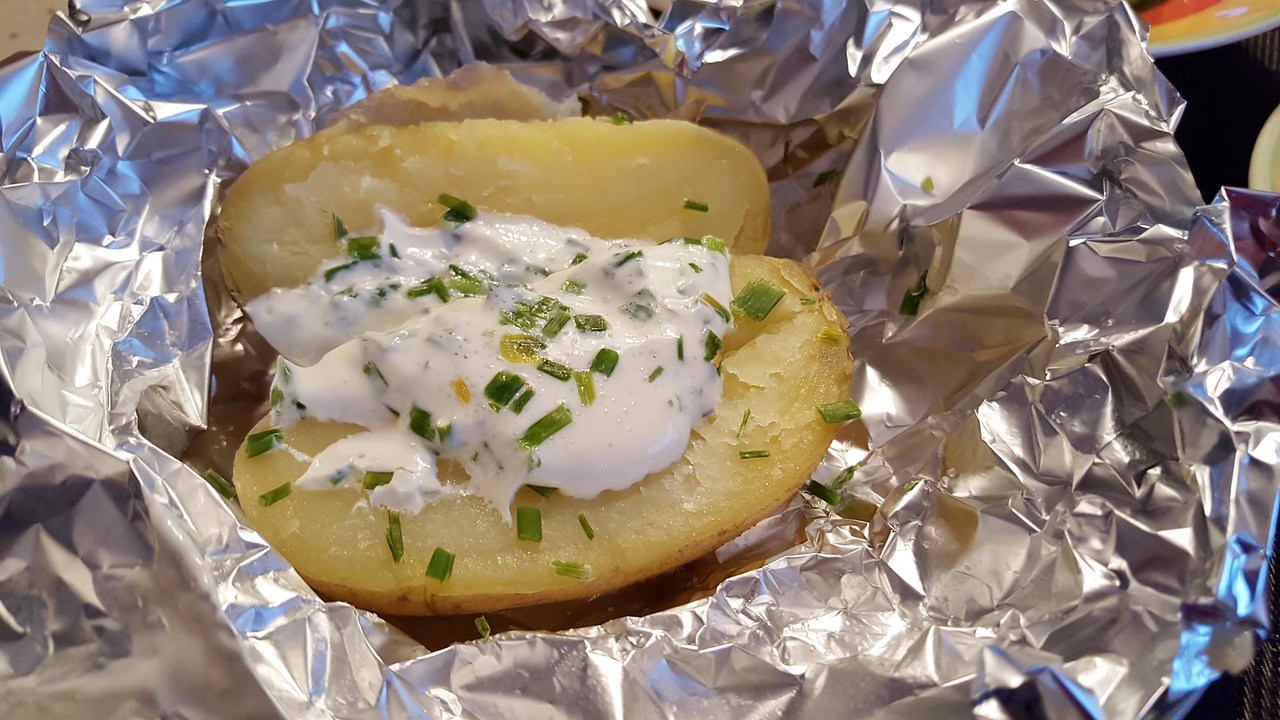
Do not wrap the potato in foil for this method. Foil traps steam, which softens the skin and prevents dry circulating heat from doing its job. Foil-wrapped baked potatoes also require careful handling after cooking because food-safety agencies have linked improperly held foil-wrapped baked potatoes with botulism risk in rare but serious cases.
Step-by-step method
1. Scrub and dry the potatoes
Wash the potatoes under running water and scrub away visible soil. Dry them thoroughly with a towel. Surface moisture delays browning and can make the skin leathery rather than crisp.
2. Pierce the skin
Use a fork to pierce each potato several times. This gives steam a path to escape and reduces the chance of splitting during cooking. Six to eight small piercings around each potato are enough.
3. Oil and salt evenly
Rub each potato with a thin film of oil, then season with salt. Aim for even coverage, not a greasy coating. Too much oil can smoke in some air fryers and may leave the skin heavy instead of crisp.
4. Air fry with space around each potato
Place the potatoes in a single layer. Air circulation is the main advantage of the appliance, so crowding the basket works against the method. Cook at 400°F, turning the potatoes once halfway through if your air fryer browns unevenly.
5. Check for doneness
Start checking medium potatoes at about 35 minutes. Use tongs or a towel to gently squeeze the sides. A done potato should give under light pressure. For a more precise check, insert a thermometer into the center. Many potato-industry references use about 210°F as a fully baked benchmark, while many cooks find 205°F to 210°F gives a fluffy center without an underdone core.
6. Rest, split, and serve
Let the potato rest for 3 to 5 minutes. Cut a slit lengthwise, press the ends gently to open the center, and fluff the inside with a fork. Add butter, yogurt, cheese, vegetables, beans, chili, or other toppings after the interior is opened.
Timing guide by potato size
Air fryer timing should be treated as a range. Basket size, wattage, starting potato temperature, and potato shape all play a role. Long, narrow russets often finish faster than round, dense potatoes of the same weight.
| Potato size | Approximate weight | Temperature | Estimated time | Best doneness check |
|---|---|---|---|---|
| Small | 5 to 6 oz | 400°F | 30 to 35 minutes | Tender squeeze and soft center |
| Medium | 7 to 10 oz | 400°F | 35 to 45 minutes | About 205°F to 210°F internal temperature |
| Large | 11 to 13 oz | 400°F | 45 to 55 minutes | Thermometer plus fork-tender texture |
| Extra large | 14 oz or more | 390°F to 400°F | 55 to 65 minutes | Check center temperature in the thickest part |
If the skin is browning too quickly before the center softens, reduce the heat to 375°F and continue cooking. If the center is nearly done but the skin needs more crispness, raise the temperature for the final 3 to 5 minutes and watch closely.
Why skin texture changes so much
The best air fryer baked potato has contrast: a dry, crisp skin around a fluffy interior. That result depends on a few controllable factors.
Surface dryness is the first factor. A wet potato steams before it crisps. Drying after washing is part of the cooking method, not just a cleanup step.
Oil quantity is the second factor. A light coating helps transfer heat and hold salt on the skin. A heavy coating can create a greasy exterior and may smoke in some models if oil drips near the heating element.
Space is the third factor. Air fryers depend on moving hot air. When potatoes touch or stack, the hidden surfaces steam and brown unevenly.
Foil changes the result. A foil-wrapped potato can become tender, but it will not cook like a classic air fryer baked potato because the skin is shielded from dry circulating heat. For crisp skin, leave the potato unwrapped.
Nutrition and food-safety notes
A plain baked potato is often more nutrient-dense than its reputation suggests. USDA-linked nutrient databases commonly list a medium baked potato with skin at about 160 calories, roughly 4 grams of fiber, and a high potassium contribution before toppings are added. The final nutrition profile changes quickly with butter, cheese, sour cream, bacon, or salty sauces, so toppings have the biggest effect on calories, saturated fat, and sodium. See also: baby&kids.
Food safety mainly concerns storage after cooking. If potatoes are not served right away, keep them hot or refrigerate them promptly. Public food-safety guidance in the United States commonly uses the 40°F to 140°F range as the temperature zone where bacteria can grow quickly and advises refrigerating leftovers within two hours, or within one hour in hotter conditions above 90°F. For baked potatoes, remove any foil before refrigeration and cool leftovers in a way that does not trap heat.
Acrylamide is another consideration for browned starchy foods. The FDA explains that acrylamide can form when plant-based foods such as potatoes are cooked at high temperatures, including frying, roasting, and baking. That does not mean baked potatoes should be avoided, but it does support a practical approach: cook until golden and tender rather than deeply charred, and keep the overall diet varied.
Common mistakes and how to fix them
The potato is crisp outside but hard inside
This usually means the heat was too high for the potato size or the potato was especially dense. Lower the air fryer to 375°F and continue cooking in 5-minute intervals. For very large potatoes, consider starting at 390°F instead of 400°F.
The skin is soft instead of crisp
Check three things: the potato may not have been dried fully, the basket may have been crowded, or the potato may have been wrapped in foil. Next time, dry thoroughly, use less oil, and leave space around each potato.
The potato tastes bland
Season the skin before cooking and the interior after splitting. Salt added only at the table often seasons the toppings but not the potato itself. After opening, fluff the center and add a small pinch of salt before butter or sauce.
The potato cooks unevenly
Choose potatoes of similar size when cooking more than one. Turn them halfway through if your air fryer has strong hot spots. If one potato is much larger, start it 10 minutes earlier or finish it separately.
Topping ideas for different meal occasions
The baked potato can serve as a side dish or a full meal, depending on the toppings. For retail and foodservice inspiration, the most useful combinations balance richness, protein, acidity, and freshness.
- Classic: Butter, sour cream, chives, black pepper, and shredded cheddar.
- Higher-protein: Greek yogurt, cottage cheese, turkey chili, beans, chicken, or tuna salad.
- Vegetable-forward: Broccoli, roasted peppers, mushrooms, corn, spinach, salsa, or scallions.
- Global pantry style: Curry chickpeas, kimchi, miso butter, taco beans, pesto, or harissa yogurt.
- Lower-sodium approach: Use herbs, lemon, pepper, roasted garlic, or plain yogurt instead of heavily salted toppings.
For food brands and content publishers, the air fryer baked potato is more than a simple recipe. It fits demand for convenient bases, customizable meals, smaller-batch cooking, and pantry-friendly toppings. The potato acts as a low-cost platform for dairy, sauces, canned beans, frozen vegetables, prepared proteins, and seasoning blends.
Frequently asked questions
Do you need to microwave the potato first?
No. You can cook the potato entirely in the air fryer. A microwave start can shorten total time, but the texture may be slightly different because the interior cooks before the skin has time to dry and crisp. If speed matters, microwave for 4 to 6 minutes, then oil, salt, and air fry until the skin crisps.
Should you wrap an air fryer baked potato in foil?
Not for crisp skin. Foil traps steam and blocks direct airflow. It can make the potato tender, but the result is closer to a steamed potato than a crisp-skinned baked potato.
What temperature is best?
For most medium russet potatoes, 400°F is a good default. Use 375°F to 390°F for extra-large potatoes or appliances that brown aggressively. The center should be soft, and a thermometer reading around 205°F to 210°F is a useful quality target.
Can you reheat a baked potato in the air fryer?
Yes. Refrigerate leftovers promptly, then reheat at 350°F to 375°F until hot in the center. Time depends on potato size and whether it is whole or split. A split potato reheats faster and helps the interior warm more evenly.
What potatoes are best for air fryer baked potatoes?
Russets are the best default because they bake up fluffy and have sturdy skins. Yukon Gold potatoes can work, but their texture is creamier and less fluffy. Red potatoes are better for roasting than for a classic baked-potato result.
The practical takeaway
The most reliable air fryer baked potato method is straightforward: use a russet potato, dry it well, pierce it, coat it lightly with oil and salt, cook it unwrapped at about 400°F, and check doneness by texture and internal temperature rather than time alone. This gives the air fryer enough dry heat to crisp the skin while the center becomes tender and fluffy.
For consumers, it is a dependable weeknight technique. For food and beverage observers, it reflects a broader pattern: shoppers continue to look for flexible, low-cost meal bases that fit smaller appliances, customizable toppings, and quick meal assembly. The air fryer baked potato fits that need because it is familiar, adaptable, and easy to improve with a few evidence-based cooking details.