
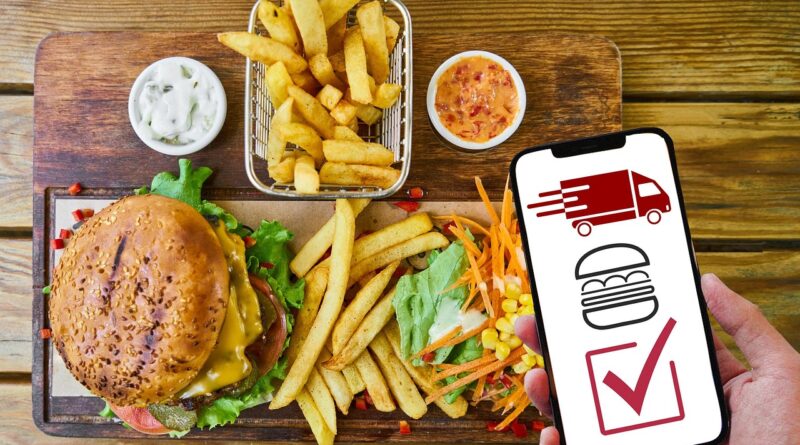
Fast food near me in 2026 and how convenience shapes local choice
In 2026, fast food near me is rarely just a search for the closest counter. Diners usually want a nearby restaurant that is open now, easy to reach, clear on price, reliable for pickup or drive-thru, and fast enough for a short meal window. For the food and beverage industry, the phrase is a useful signal of how convenience, value, digital ordering, and local availability come together at the point of purchase. Public data from the CDC, USDA Economic Research Service, and the National Restaurant Association indicates that fast food remains part of routine U.S. eating behavior, while operators compete in a tighter environment where value perception and operational accuracy can matter as much as brand awareness.
Why fast food near me is a local intent, not a national ranking
A search for fast food near me is location-sensitive by design. Results can shift by block, time of day, device, delivery radius, restaurant hours, traffic conditions, and whether a platform is showing sponsored placements. That makes it different from a broad search for fast-food brands or menu trends. The searcher is not only asking which chain is popular nationally; they are trying to solve an immediate meal decision.
That practical intent usually includes several questions at once:
- Which fast-food locations are close enough for the current trip?
- Which ones are open now, and which still accept pickup, drive-thru, or delivery orders?
- How much will the meal cost after taxes, service fees, delivery fees, or promotional discounts?
- Does the location have the menu item, beverage, or dietary option the diner wants?
- Do recent reviews, wait times, or photos suggest a quick and reliable visit?
This is why a national list of restaurants cannot fully answer the query. A useful industry view needs to explain the decision factors behind local fast-food discovery and what those signals mean for foodservice, beverage, snack, and packaged-food brands. For more category analysis, visit the Food & Beverages section.
What recent U.S. data says about fast-food demand
Recent public data supports a clear conclusion: fast food remains embedded in everyday eating patterns, but the market is being shaped by price sensitivity, technology investment, and the broader shift toward food away from home. The CDC National Center for Health Statistics reported in June 2025 that, during August 2021 to August 2023, 32.0% of U.S. adults aged 20 and older consumed fast food on a given day. The same data brief estimated that adults received an average of 11.7% of daily calories from fast food, with a higher share among adults ages 20 to 39 than among adults aged 60 and older.
The USDA Economic Research Service reported in June 2026 that total U.S. food spending reached $2.51 trillion in 2025, and food away from home accounted for 56.3% of total food expenditures. That does not mean every dollar went to quick-service restaurants, but it does show the scale of away-from-home eating occasions in which fast-food restaurants compete. USDA ERS also reported that, in 2025, average daily inflation-adjusted sales at limited-service restaurants were lowest in January and peaked in May, a reminder that local demand can move by season as well as by daypart and week.
The National Restaurant Association’s 2026 State of the Restaurant Industry materials add the operator perspective. The association projected total restaurant and foodservice sales of $1.55 trillion in 2026, while also noting persistent cost pressure, cautious household spending, and a challenging traffic environment. Its executive summary said 61% of adults consider dining out essential to their lifestyle, and it emphasized the growing importance of value offerings, loyalty programs, digital ordering, automation, and data analytics.
| Signal | Most relevant source period | Industry meaning |
|---|---|---|
| 32.0% of U.S. adults consumed fast food on a given day | CDC NCHS, August 2021-August 2023, published June 2025 | Fast food remains a common meal behavior rather than an occasional niche. |
| Food away from home represented 56.3% of U.S. food expenditures | USDA ERS 2025 data, updated June 2026 | Restaurants and prepared-food channels continue to compete strongly with at-home eating. |
| Restaurant and foodservice sales projected at $1.55 trillion | National Restaurant Association 2026 outlook | The sector is large, but growth is occurring alongside pressure on margins and traffic. |
| Value offerings and loyalty programs highlighted as key | National Restaurant Association 2026 outlook | Local fast-food choice is increasingly shaped by perceived value, not only proximity. |
What diners check before choosing nearby fast food
Distance, hours, and certainty
The first filter is practical certainty. A restaurant may be physically close, but if its hours are unclear, its listing is outdated, or its pickup instructions are confusing, the diner may choose a slightly farther competitor. This is especially true during breakfast, late night, commuting windows, school pickup periods, and short lunch breaks. In those moments, the consumer is often reducing risk rather than browsing widely.
For operators, location data is not a background task. Store hours, holiday schedules, drive-thru availability, temporary closures, kitchen cutoffs, and delivery zones all affect whether a local search converts into an order. If a customer arrives to find closed doors or an unavailable item, they may not separate the local execution problem from the brand itself.
Value and visible pricing
Fast food has long benefited from a value reputation, but consumers now compare total cost across more channels. A menu price may look attractive until delivery fees, service fees, small-order fees, or tip expectations are added. At the same time, grocery prepared foods, convenience stores, warehouse clubs, and meal deals from casual chains are competing for the same budget-conscious occasion.
That makes value communication more specific. Diners respond to visible bundles, clear portion expectations, loyalty rewards, and promotions that are easy to understand before checkout. For food and beverage suppliers, the lesson is that affordability is not only about low price. It also includes fullness, drink pairing, snackability, portability, and whether the product fits a meal deal that feels complete.
Menu fit and beverage occasions
Nearby fast-food decisions are often menu-led. A consumer may search because they want chicken, burgers, tacos, coffee, breakfast, fries, a smoothie, or a limited-time beverage. This creates room for beverage and snack innovation, because a drink or side item can influence where the customer goes even when the main meal category is familiar.
The National Restaurant Association’s 2026 executive summary highlighted beverage innovation as a traffic driver for many operators. For FMCG brands, that is a reminder that beverages, sauces, desserts, and snackable add-ons can act as trend bridges between foodservice and retail shelves. However, a strong restaurant launch should not automatically be treated as proof of grocery demand. The channel, price point, preparation method, and consumption context are different.
Reviews, photos, and operational consistency
Reviews and photos matter because local searchers are looking for signs of reliability. Recent complaints about long waits, inaccurate orders, cleanliness, or missing items can outweigh a national campaign. Conversely, clear photos, current menu information, and evidence of steady service can reassure a diner who needs to choose quickly.
For the industry, the point is straightforward: local execution is part of the product. A new sauce, beverage, or menu platform may attract attention, but the searcher still has to believe the nearby location can deliver it quickly and correctly.
What this means for FMCG and foodservice strategy
For fast-moving consumer goods teams, fast food near me is more than a restaurant search term. It is a window into how consumers organize everyday eating around time pressure. The same consumer who buys packaged snacks, bottled drinks, frozen meals, sauces, and ready-to-eat grocery items may also rely on quick-service restaurants when convenience wins. See also: baby&kids.
Several implications stand out:
- Convenience is a product attribute. Packaging, portion size, resealability, portability, and ease of consumption can matter as much as flavor.
- Local occasions influence national demand. Breakfast traffic, after-school snacking, late-night cravings, and road-trip stops can create different product needs even within the same brand portfolio.
- Beverages are strategic. Drinks can support margin, differentiation, and repeat visits, especially when flavor variety or customization gives consumers a reason to choose one nearby location over another.
- Foodservice trends need validation. A limited-time restaurant item may reveal curiosity, but retail teams still need evidence that shoppers will buy the flavor, format, or pack size for home use.
- Value needs a full-occasion view. A low unit price may not be enough if the consumer does not see the product as filling, shareable, portable, or easy to pair.
The main takeaway is that convenience and value are converging. Consumers want speed, but not at any price. They want novelty, but not if it creates ordering friction. They want digital access, but only when the digital system makes the meal easier.
How operators can match the fast food near me moment
Operators cannot control every local search result, but they can improve the signals that make a nearby diner more likely to choose them. The National Restaurant Association’s 2024 Restaurant Technology Trends reporting found that many operators were directing resources toward digital or location-based marketing, loyalty or rewards technology, and systems that improve operational efficiency. Those investments align closely with what near me searchers are trying to resolve.
A practical response has four layers:
- Keep local information accurate. Hours, address details, phone numbers, ordering links, delivery availability, and holiday changes should be consistent across major platforms.
- Make value easy to understand. Meal deals, app offers, family bundles, beverage upgrades, and loyalty rewards should be visible before the customer commits.
- Reduce order uncertainty. Menus should clearly show item availability, customization rules, allergen information where applicable, and pickup instructions.
- Connect marketing to operations. A promotion that drives traffic can backfire if staffing, inventory, or kitchen flow cannot support the promise.
For chain restaurants, the challenge is consistency across many locations. For independent quick-service operators, the challenge is visibility against larger brands with stronger app ecosystems and media budgets. In both cases, the local decision is usually won by removing friction from the moment of need.
Limits and risks in local fast-food discovery
Readers should treat any fast-food list with caution unless it is tied to a specific address, date, and time. Local search results can change quickly, and third-party platforms may show different menus, prices, fees, delivery ranges, or operating hours. A restaurant that appears convenient in one app may be less convenient after final checkout costs are shown.
There are also health and nutrition considerations. The CDC NCHS data brief notes that fast-food consumption is associated in research with high caloric intake and poorer diet quality. That does not mean every fast-food meal has the same nutritional profile, and it does not make fast food irrelevant to modern consumers. It does mean portion size, frequency, beverage choice, sides, and customization matter when people make fast food part of a regular routine.
For industry readers, the risk is overgeneralization. A spike in searches for nearby fast food may reflect convenience needs, weather, travel, school schedules, local promotions, or price stress. It should be combined with sales data, loyalty behavior, menu mix, and local demographic context before becoming a product or channel strategy.
Frequently asked questions
What does fast food near me usually mean?
It usually means the searcher wants a nearby, quick, and currently available meal option. The intent often includes open hours, distance, menu fit, price, pickup, drive-thru, delivery, and confidence that the order can be completed without delay.
Why do prices vary between fast-food locations?
Prices can vary because of local labor costs, rent, franchise decisions, taxes, delivery platform fees, promotional participation, and regional pricing policies. App prices and in-store prices may also differ, so total checkout cost is often more useful than menu price alone.
Is fast-food demand still strong in 2026?
Public data suggests fast food remains a regular part of U.S. eating behavior and the broader restaurant sector remains large. At the same time, the 2026 operating environment includes cost pressure, cautious consumers, and stronger competition for value occasions.
How can food and beverage brands use fast-food trend signals?
They can use quick-service menus, beverage launches, limited-time offers, and local ordering behavior as early indicators of flavor and occasion interest. Those signals should be tested against retail shopper data before being used for packaged-goods decisions.
Should restaurants focus more on apps or physical convenience?
Both matter. Apps can improve ordering, loyalty, personalization, and payment, but physical convenience still depends on location, access, speed, signage, staffing, and order accuracy. The strongest local experience connects digital ease with dependable store execution.